
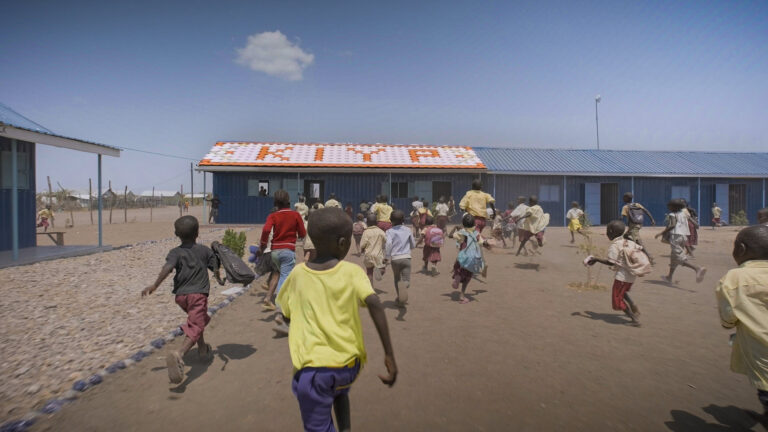
On a hot afternoon in the Kalobeyei Settlement in Kenya, Grade 4 teacher Mr. Milton stands in front of his class and notices something that was once rare.
His students are focused.
They are listening attentively, taking notes, raising their hands, and actively participating in the lesson, even during the hottest hours of the day.
Just a few months ago, this would have been difficult.
For years, classrooms at Kalobeyei Integrated Youth Progress (KIYP) – like many other schools in Kenya – were covered with iron-sheet roofs that absorbed and trapped heat. As temperatures rose after lunch, classrooms became increasingly uncomfortable, reaching 40 degrees Celsius. Students often struggled to concentrate, and teachers found it challenging to keep learners engaged throughout the afternoon.
“The heat from the iron-sheet roof affected concentration, especially after lunch,” recalls Mr. Milton. “Students found it difficult to remain focused during the hottest hours of the day.”
Today, the story is different.
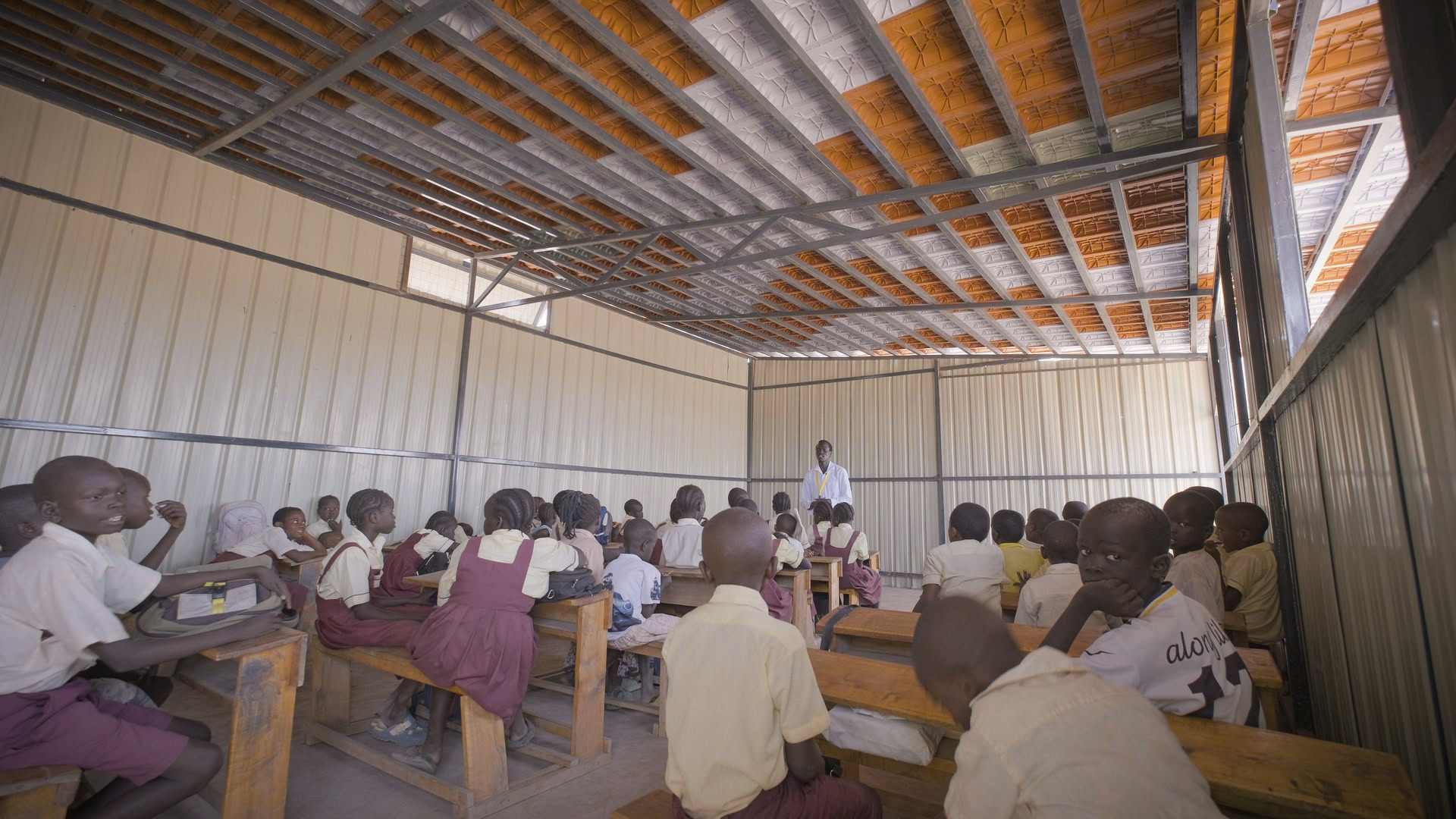
Grade 4 students complete their afternoon classwork after lunch in a cooler classroom, where improved conditions are helping them stay focused and engaged.
This reality was made possible through the Green School Project, enabled by SWEEP and SOLCO Partnerships and the use of an innovative circular economy roofing solution, Climatile™.
Turning plastic waste into climate-resilient infrastructure
What was once discarded plastic from single-use food packaging has been transformed into climate-smart infrastructure that not only diverts plastic waste from the environment but also creates income opportunities for local collectors.
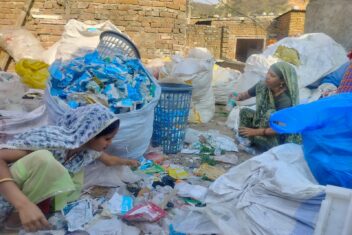
Almost 700 kg of plastic waste was collected and sorted by refugee-led organisations and local community members in Kakuma Refugee Camp and the adjoining Kalobeyei Settlement and incorporated into the brand-new Climatile™ roof at KIYP.
Climatile technology is designed and manufactured by Kenya-based company TakaZuri. Recycled plastic waste is utilised to create durable, lightweight tiles that are fire-resistant, provide strong UV protection and act as all-important cooling insulation.
A cool learning environment
The impact of the new roof was immediate. One student shared that he no longer struggles with sweat dripping onto his exercise books while taking notes. Instead, he can focus on what matters most, learning.
“I can concentrate much better now because the classroom feels cooler”, he explained.
For Mr. Milton, these changes represent far more than improved comfort. They are creating better conditions for learning, helping students to stay engaged and giving teachers an environment where they can teach more effectively.
A cooler classroom means fewer distractions. Better concentration leads to greater participation. And when students can focus, they have a better chance to succeed.
What makes this transformation even more remarkable is that it is happening in a refugee-setting, where resources are often limited and climate challenges are part of daily life. By combining circular economy principles with climate-smart design, the Green School Project is addressing environmental challenges while improving educational opportunities for children.
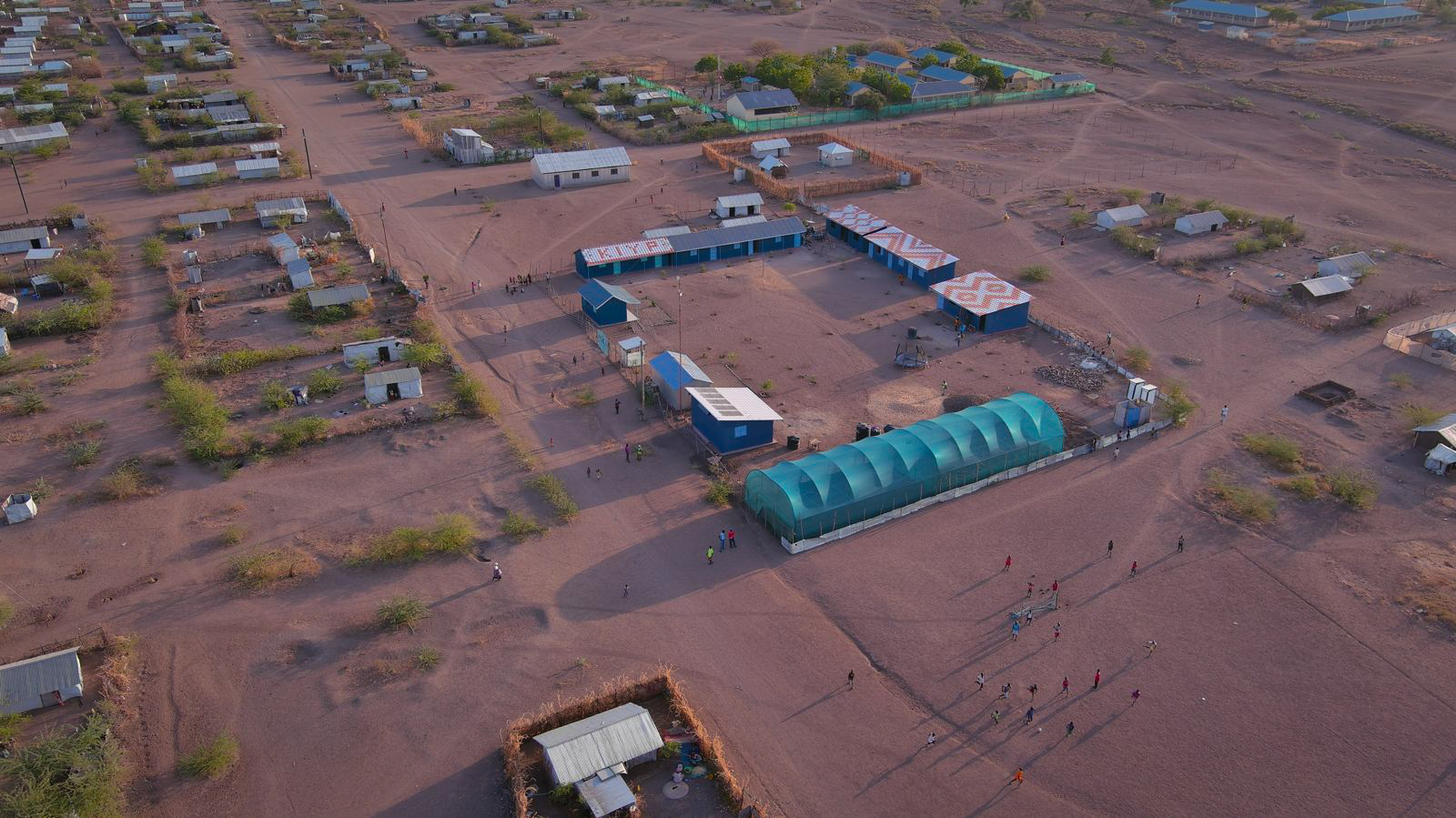
These educational opportunities also now include a new area of learning focused on environmental education and waste management covering everything from separation at source to resource recovery.
The new roof may seem like a simple change, but for the students beneath it, its impact is profound. What was once plastic waste has become part of a learning environment where children can focus less on the heat above them and more on the future ahead of them.
The SWEEP (Sustainable Waste Employment and Environmental Progress) partnership is a global collaboration between WASTE, Last Mile Climate, the Danish Refugee Council, and other key stakeholders, to collectively address solid waste management challenges in displacement settings. Find out more about SWEEP and the Green School Project here.