Across India, cities generate vast quantities of organic waste, while farmers face declining soil health and struggle to access affordable, good-quality organic manure. What if one problem could help solve the other?
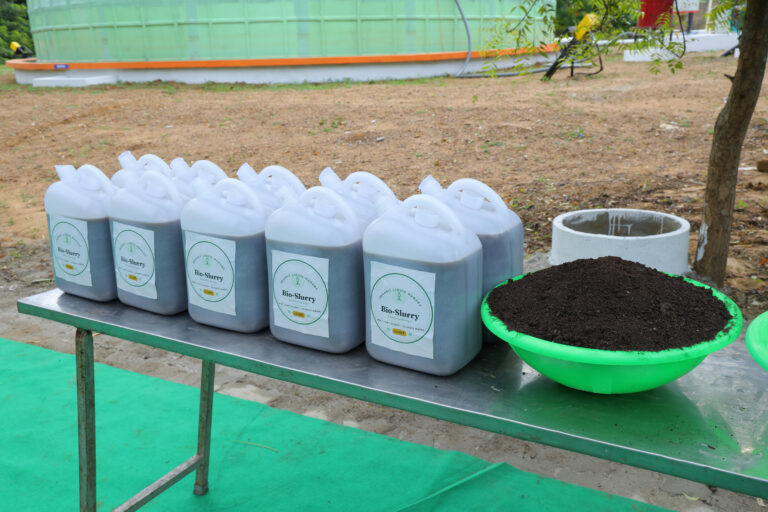
This is the driving force behind Carbon Loops, a Chennai-based small and growing business (SGB) founded by husband-and-wife team Kern Agrawal and Ranjini Prabakaran. This innovative business works with communities to collect and process organic waste into biogas, before transforming the leftover material into organic manure for farmers. In doing so, it connects two challenges that are often treated separately: managing urban waste and restoring the health of rural soils.
Today, Carbon Loops processes 100 metric tonnes (MT) of waste each day across the state of Tamil Nadu, working with a large network of farmers. With support from our impact investment initiative, Take-a-Stake (TAS), the business is preparing for its next phase of ambitious growth.
We spoke to co-founder Kern about the idea that sparked Carbon Loops, the challenges of building a commercially sustainable waste-management business, and the ambition to help close the loop on food across the whole of India. Check out the exclusive interview below to find out more.
Let’s start at the beginning, where did the idea for Carbon Loops come from?
Well, 10 years ago my wife and I left the city to begin organic farming. I was a first-time farmer – I hadn’t even grown a money plant in my life, so it was a lot of learning for me but my wife had a bit more experience with kitchen gardening.
After a year of hard work, we discovered that it was impossible to find good quality organic manure instead of chemical fertilizers. We began to see a bigger picture too, anything we grew in rural India was being transported to urban cities but ultimately it was ending up as solid or sewage waste.
In rural India we are facing a huge decline in soil health which in turn is lowering farmer incomes and the quality of food being produced, and accelerating the impacts of climate change as degraded soil holds less water and is more vulnerable to drought and erosion. After seeing these problems first hand, we wondered if there was a way of doing things differently and channelling this waste back into rural India to create a close loop system of food. That was really where the idea for Carbon Loops came from.
And how have you grown that seed of an idea into a viable business?
While we were looking at different ways of channelling the organic waste back to rural India, we realised that there was a cost attached to it. We knew that we had to make our solution financially sustainable right from the beginning and ensure the manure got to the farmers, even though they couldn’t afford to cover the cost. We therefore needed another revenue stream, which is where biogas came in.
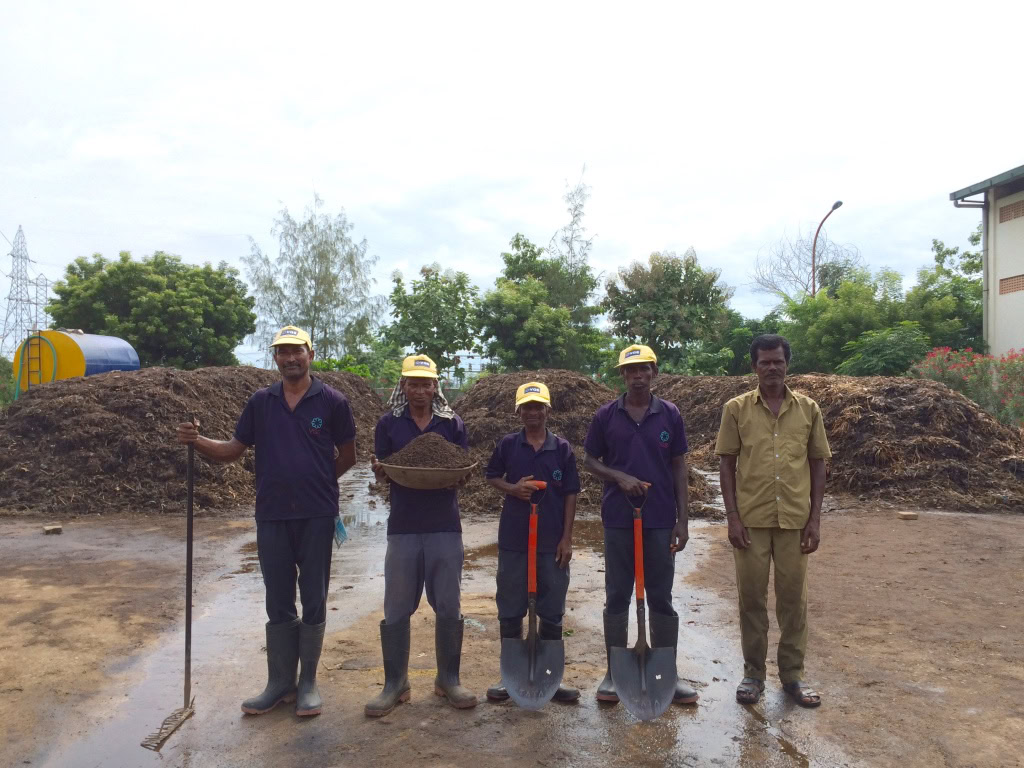
Today we collect and process 100 MT of waste each day across 50 locations in the state of Tamil Nadu and work with 100 farmers who grow all kinds of crops, and we work with a large dairy producer too.
What we do is still a drop in the ocean though. As a state we generate 15,000 MT of organic waste each day and that’s only Tamil Nadu. What if you were to look at the whole of India, the largest population in the world.
Have you faced any challenges trying to scale Carbon Loops?
The main challenge has been the mindset of the public; they are used to disposing of waste and forgetting about it. How do we make people conscious that what they are sending to landfill is going to come back and harm them with mosquitoes and spread of diseases like malaria and dengue fever. Or the water contamination which they might not see but has a huge impact on rural areas.
I think our biggest challenge is saying ‘hey if you could just do a small step in segregating your waste into wet and dry it would help us recycle in a more efficient way.’
And how has partnering with Take-a-Stake (TAS) had an impact on your business?
Today we are a $1 million revenue business, it took us nine years to get here, but this slow pace has helped us build a solid foundation, and we are now ready to be ambitious. Over the next two to five years, we are aiming to reach $10 million in revenue.
TAS came in this financial year and is helping us to realise this ambition. Previously we had just one banking partner, but TAS helped us build relationships with multiple banks. Having other funding partners willing to invest changes how banks perceive us and puts us in a stronger position to raise capital for our next stage of growth.
I think it is really important to have a fund dedicated to waste management as very few banks are willing to fund waste management companies. By creating success stories like ours, TAS helps encourage more formal financial institutions to take waste management companies seriously.
We also see TAS, not just as a funding partner, but somebody who wants to make a real change in waste management in India and help start-ups who are giving it a shot. Their network and technical assistance have been phenomenal; they have linked us up with mentors who are gladiators of the start-up world and farming organisations to help us sell our products.
What advice would you give to aspiring waste management businesses like yours?
Don’t rush it, take your time and solve the challenge for your end user. Most start-ups see waste everywhere and want to just make a technology to process or segregate it but if you could look at it from the end user, like the municipal commissioner whose job is to dispose of waste in an environmentally friendly and scientific way but at the lowest cost, you can see how your technology can help them.
We visited, for example, more than 100 landfills and spent days talking to those who collected the waste and dumped in landfills to try to understand why they were dumping and not processing.
What is continuing to drive you forward as a business and what are your ambitions for the future?
Again, our end users; they continue to be our driving force. The person who actually uses our manure and sees that their crop is much greener with a better yield. When we do a biogas project, we work in villages where they get a very interrupted supply of electricity and we are able to solve that problem and provide a stable supply instead. This motivates us to keep going.
But also, we are focused on the larger picture of how you create a closed loop system of food which could power our agriculture and keep it alive to feed the 1.4 billion people across India.
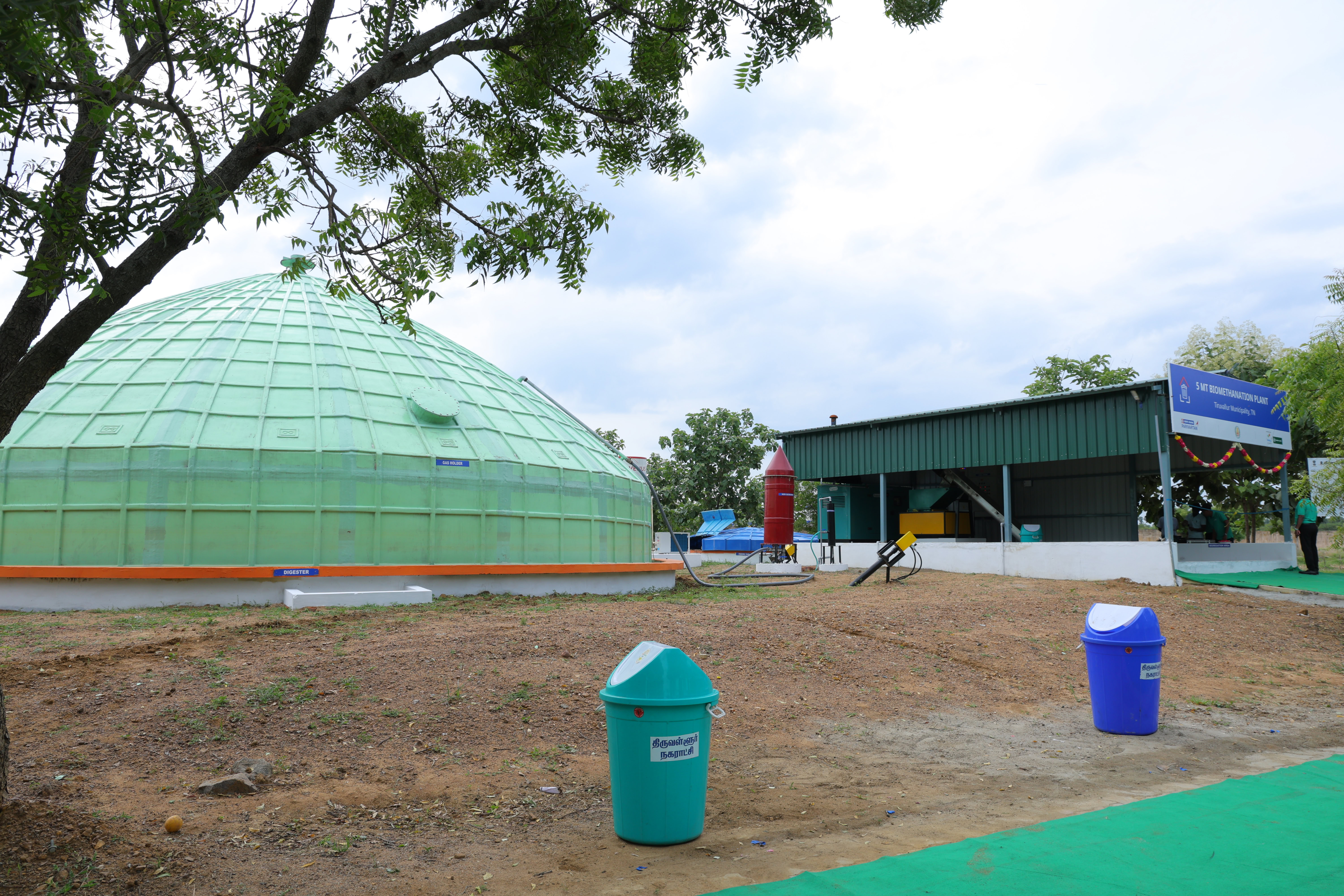
In the next five years we want to scale from 100 MT to 1,000 MT of waste collected and processed daily, from working with 100 farmers to 1,000 farmers, and expand to look at more of a South India approach with two or three additional states.
This may sound ambitious for five years, but we have a good solid foundation, a good team and good investment partners to help us accelerate.
What needs to happen to eventually reach those 1.4 billion people across India?
I think in the next 10 years we need to create at least 100 more entrepreneurs like us in other states in India. Waste management needs very local players who understand the local language, local community, and local government, so they can bring all the stakeholders along. We must support these businesses with their technology and funding models. India is a massive country with a global impact, and we cannot solve this huge problem on our own.
With a country as large and diverse as India, closing the loop on food will take more than one company. It will require a network of local businesses with the knowledge, technology and funding to develop solutions that work for their communities. We are proud to support Carbon Loops as it grows and helps pave the way for others.
A big thank you to Kern for sharing Carbon Loops’ journey with us. Find out more about Take-a-Stake here or read our previous interview with BankaBio, another inspiring business working in sanitation and water management.