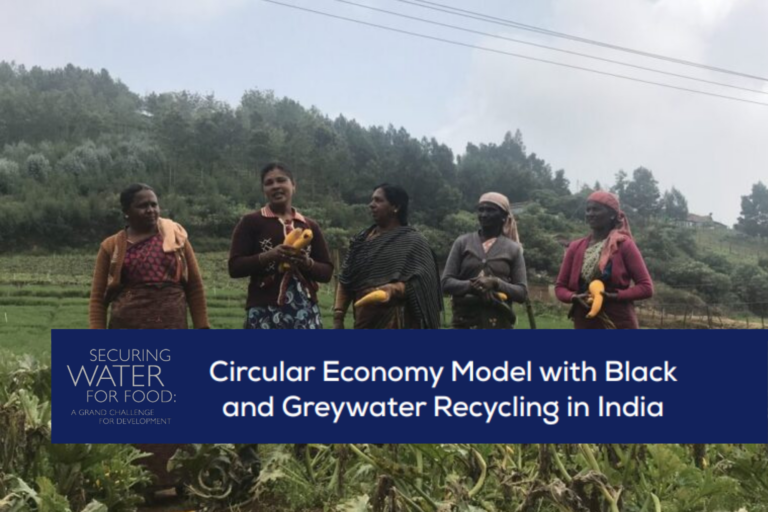
In partnership with the Rural Development Organization (RDO) Trust WASTE developed a model for producing high-quality co-compost from wastewater and faecal sludge for the cultivation of exotic vegetables by women farmers in the district of Nilgiris, India. To enable target consumers to buy the co-compost, WASTE implemented its Diamond Model to provide tools for private financing and potential market linking strategies in addition to generating quality co-compost and providing access to greywater. This report details the monitoring and evaluation of the innovation among the small-scale farmers of the horticulture district of Nilgiris in the state of Karnataka.
A survey of 50 randomly selected farmers assessed the circular economy–based agricultural innovation across income, yields, water use, and household practices. Farmers reported strong confidence in its sustainability and scalability. The innovation appeared to expand cultivation, improve crop yields, increase incomes, improve soil fertility, and enhance food security, with notable benefits for women’s participation. It also improved water management in stressed regions and increased vegetable farmers’ market returns through co-compost use.
This innovation received a monetary award and support from Securing Water for Food. The innovation’s aim is as to establish a local circular economy model in sanitation for agriculture that is scalable and enables women agri-entrepreneurs to have better crops with market quality compost application and an extended crop season to advance green growth in the Nilgiris.